
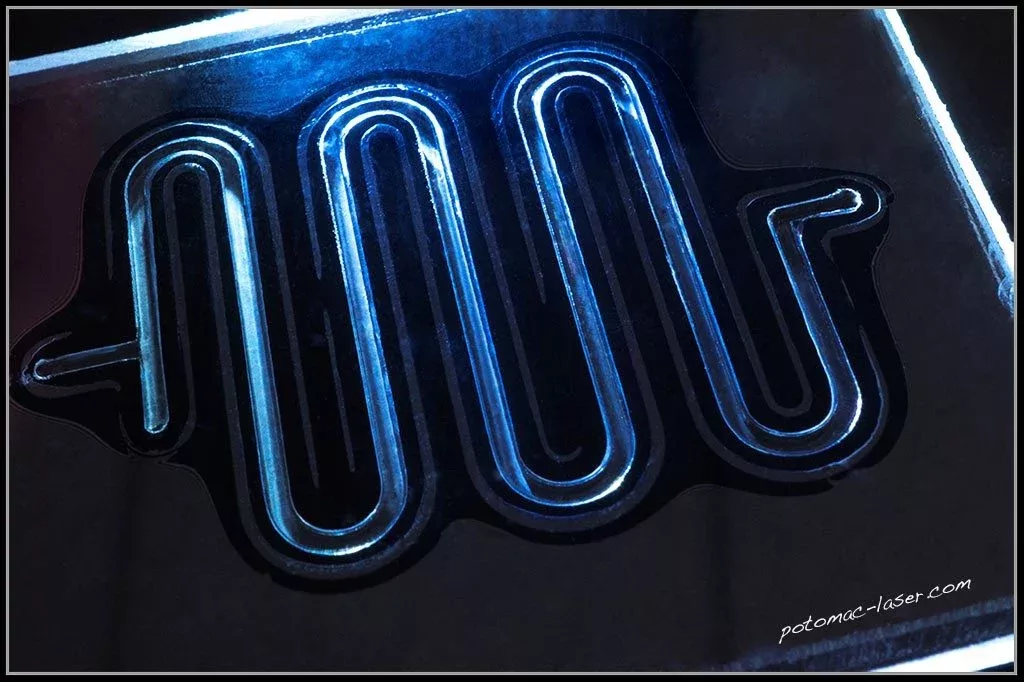
Laser micro welding is a precision joining process used to produce high-quality welds with smooth, spatter-free surfaces and minimal distortion. At Potomac Photonics, we have developed advanced laser micro welding capabilities that support both prototyping and production applications across a wide range of materials and component geometries.
Our approach to laser micro welding focuses on precise energy control, accurate fixturing, and process repeatability to ensure reliable joins on miniature parts where traditional welding methods may be unsuitable or could damage the substrate.
Advanced Laser Micro Welding Capabilities
Potomac’s micro welding technology has been developed specifically for applications that demand fine-feature joining and low thermal impact. Welding micro parts requires a higher degree of process control than conventional welding methods in order to avoid over-penetration and material damage.
We are able to laser weld both metals and polymers, including welding of polymer-to-polymer and dissimilar materials where appropriate fixtures and process parameters are used. For microfluidic components, we can achieve clear-to-clear welding, as well as welding between clear and opaque materials when needed.

Process Control and Laser Selection
Effective laser micro welding depends on selecting the correct laser source and beam characteristics for the materials and joint configuration. Key considerations include beam quality, spot size, energy stability, and the absorption characteristics of the materials being joined.
Equally important is fixturing, i.e. holding parts securely and with the proper alignment during welding ensures consistent results. Potomac has extensive experience designing and building fixtures for complex and delicate micro parts to support optimal weld quality and repeatability.
Micro Welding Methods
Potomac employs multiple laser welding methods depending on application needs:
Heat Conduction Welding: The laser energy heats the substrate material above its melting point without vaporization. This approach is effective for joining thin materials and fine wires with controlled penetration.
Keyhole Welding: By increasing the laser energy to vaporization levels, a keyhole forms in the material that allows deeper penetration welds. This technique is effective for applications requiring stronger joints or thicker sections.
Once a laser welding process is qualified for a specific application, it can be automated and scaled for high-volume production, enabling consistent results from prototype through production quantities.
Materials and Applications
Potomac’s laser micro welding services support a variety of materials used in advanced manufacturing. Commonly joined substrates include:
– Metals such as stainless steel, titanium, and Nitinol
– Engineering polymers used in microfluidics and medical components
– Hybrid combinations of metals and plastics where specialized welding strategies are required
Typical applications for laser micro welding include medical devices, microfluidic systems, biotech instrumentation, semiconductor fixtures, and other components where traditional joining methods cannot reliably achieve the required precision and repeatability.
Why Choose Potomac for Laser Micro Welding
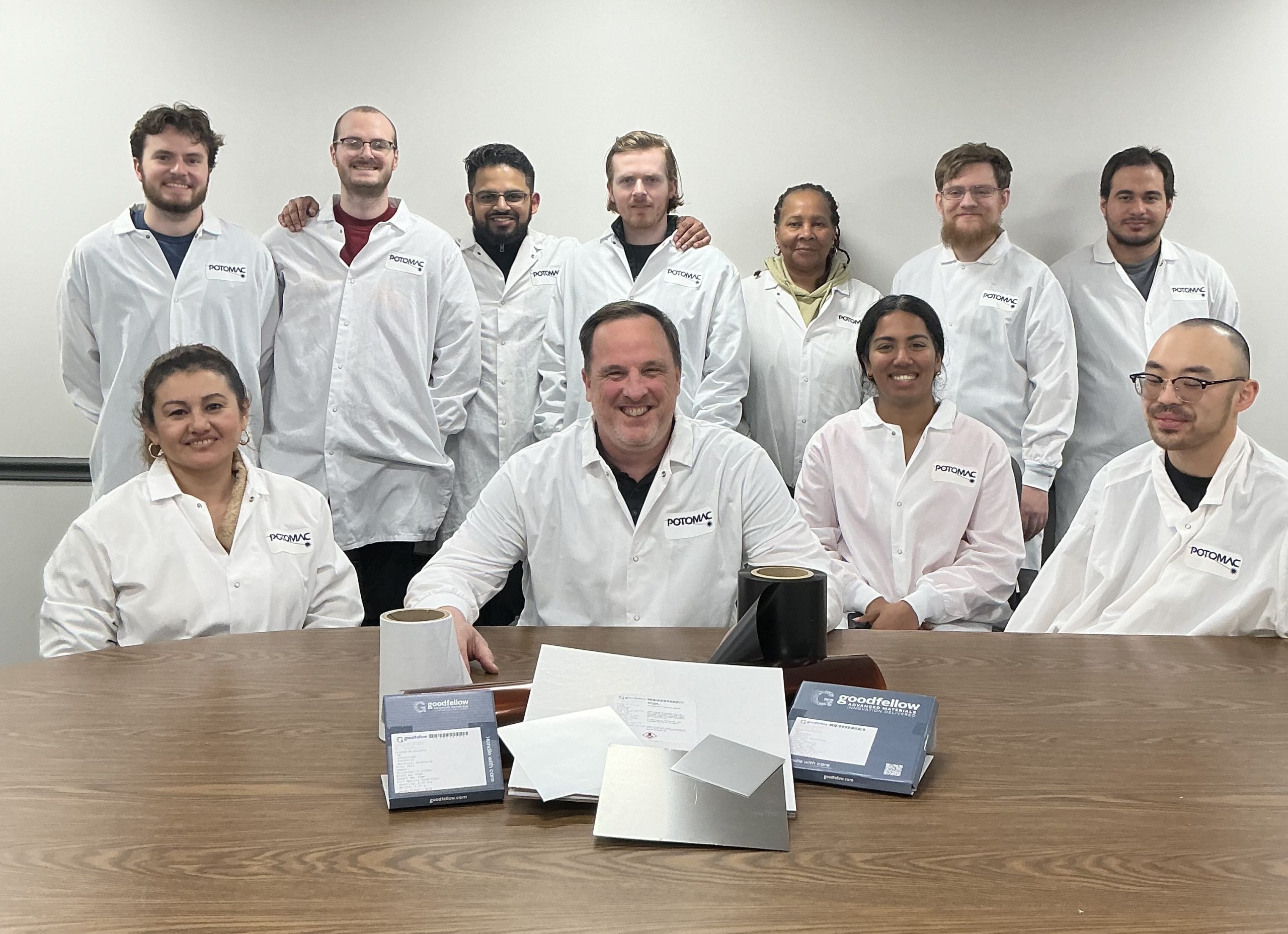
Potomac Photonics has decades of experience in microfabrication and continues to refine and expand its laser welding expertise. Our process development capabilities, combined with in-house engineering support and custom fixturing, ensure that micro welding projects are approached with both technical rigor and practical manufacturability in mind.
Whether you are validating a design in the prototyping phase or scaling a process for production, our laser micro welding services deliver reliable results with minimal thermal impact and clean, repeatable joints.
Need Additional Microfabrication?
Potomac offers generous incentives to our customers that combine laser micro welding with our exhaustive list of other microfabrication processes.
Also From the Goodfellow Group
Precision laser machining begins with the right substrate. Goodfellow supplies over 170,000 materials — including metal foils, ceramic substrates, and engineering polymers — in the exact dimensions and purities required for microfabrication.
Source your substrate material from Goodfellow before submitting for laser machining or welding.
Laser-machined and welded components can be validated for dimensional accuracy, edge quality, heat-affected zone characteristics, and material composition through Goodfellow’s ISO 17025-accredited materials testing division.
Post-machining analysis — SEM cross-section imaging, EDX elemental analysis, and tensile testing of welded joints.